From the Pacific Ocean to La Union (Global Shifts, Local Crops)
El Nino Primer: Part 2
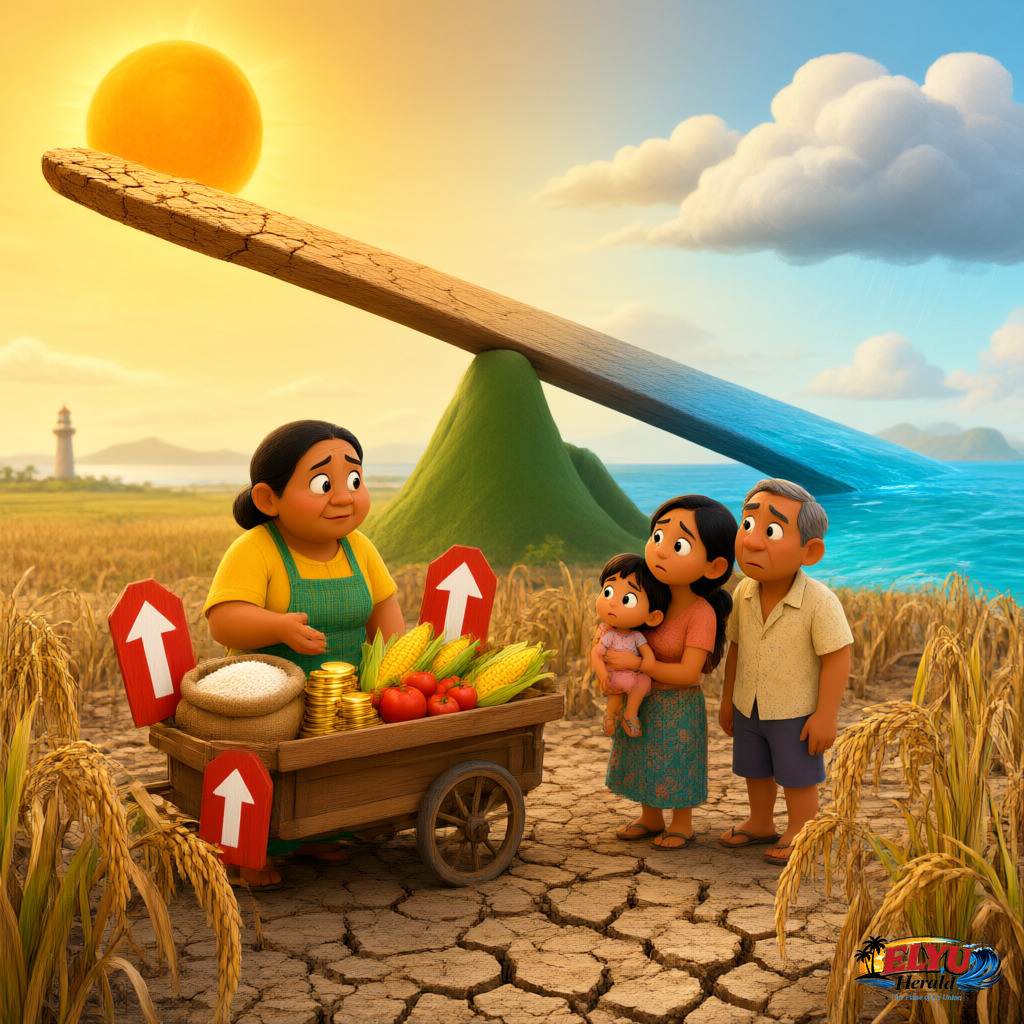
AI Generated Illustration
Imagine a giant bathtub filled with water. Normally, strong winds blow across the Pacific Ocean. These winds push warm water toward our side of the world, near Southeast Asia. This warm water creates big rain clouds that feed our crops. During a weather shift called El Niño, those winds grow weak. The warm water sloshes back toward the Americas. It drags the giant rain clouds along with it.
This shift acts like a giant seesaw. As the seesaw tilts, the clouds pack up and move east. This leaves Southeast Asia gasping for rain. Soon, severe dry spells, harsh droughts, and wild fires break out across our region.
This global weather shift reaches right into our province of La Union. Our home has 825,072 residents. These people live across 19 municipalities and our single city, San Fernando. Many of these families depend on our fields for food and work.
La Union relies heavily on local farming. During the fourth quarter of 2025, our farmers harvested 27,117.00 hectares of palay. This massive harvest produced 122,394.28 metric tons of grain. A few months later, in the first quarter of 2026, farmers also harvested 4,231.46 hectares of corn. They grew both white and yellow varieties, producing 24,783.20 metric tons in total.
Without rain, these crops face a major threat. This is especially true for rainfed farms. Rainfed farms are fields that do not have artificial watering pumps. Instead, they depend entirely on rain for water. In La Union, rainfed farms make up 13,618.00 hectares of our palay land. If El Niño steals our rain, these fields will dry out and fail.
When crops fail, families feel the pinch in their household budgets. A lack of rain drives up the cost of basic foods like rice, corn, and sugar. These price jumps happen in local shops and across the globe. Even before the dry weather, prices of basic goods have gone up due to many other factors. In June 2026, the food inflation rate sat at a high 7.7% in La Union. Food inflation is the speed at which grocery prices rise over time. Because this rate is already high, our groceries are already very expensive. If El Niño cuts our harvests, those prices will likely climb even higher.
This article is Part 2 of a series.