
Typhoon Inday Intensifies as It Moves Near Northern Luzon
La Union expects localized thunderstorms and isolated rains as Typhoon Inday moves closer
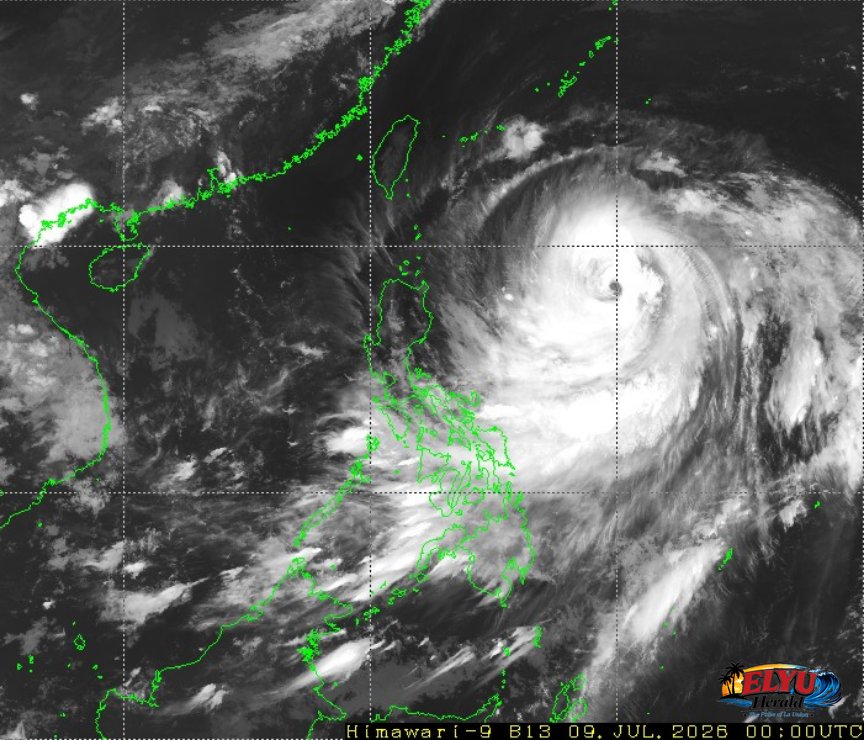
Screenshot of Himawari-9 viewer, credit Meteorological Satellite Center / Japan Meteorological Agency (JMA)
According to PAGASA in its 4:00 AM bulletin on July 9, 2026, Typhoon Inday was located 940 kilometers east of Northern Luzon, packing maximum sustained winds of 175 kilometers per hour and gusts of up to 215 kilometers per hour. It is now very much closer to land than yesterday. The storm is currently still moving west-northwestward at 20 kilometers per hour, bringing rains and gusty winds to northern provinces while triggering localized thunderstorms across the rest of Luzon.
While the eye of the typhoon remains far off the coast, the weather system is affecting regional conditions. In La Union, residents in coastal towns such as San Juan and Bauang, as well as the capital city of San Fernando, can expect partly cloudy to cloudy skies. These conditions will be accompanied by isolated rainshowers and localized thunderstorms.
The state weather bureau warned that these localized thunderstorms could trigger sudden flash floods or landslides in low-lying and mountainous areas of the province. Local disaster risk reduction and management offices are advised to monitor weather updates closely.
Key details of the weather system include:
- Current Location: 940 kilometers East of Northern Luzon (17.7°N, 130.6°E) as of 3:00 AM today.
- Wind Strength: Maximum sustained winds of 175 km/h near the center, with gusts reaching up to 215 km/h.
- Movement: West-northwestward at a speed of 20 km/h.
- Coastal Waters: Light to moderate waves ranging from 0.6 to 1.5 meters along the western seaboard of Luzon, including La Union.
PAGASA continues to monitor the movement of Typhoon Inday and the southwest monsoon, which is currently affecting the southern parts of the country. Residents are urged to stay alert for rapid weather changes, especially during afternoon or evening thunderstorms.
SOURCE: PAGASA